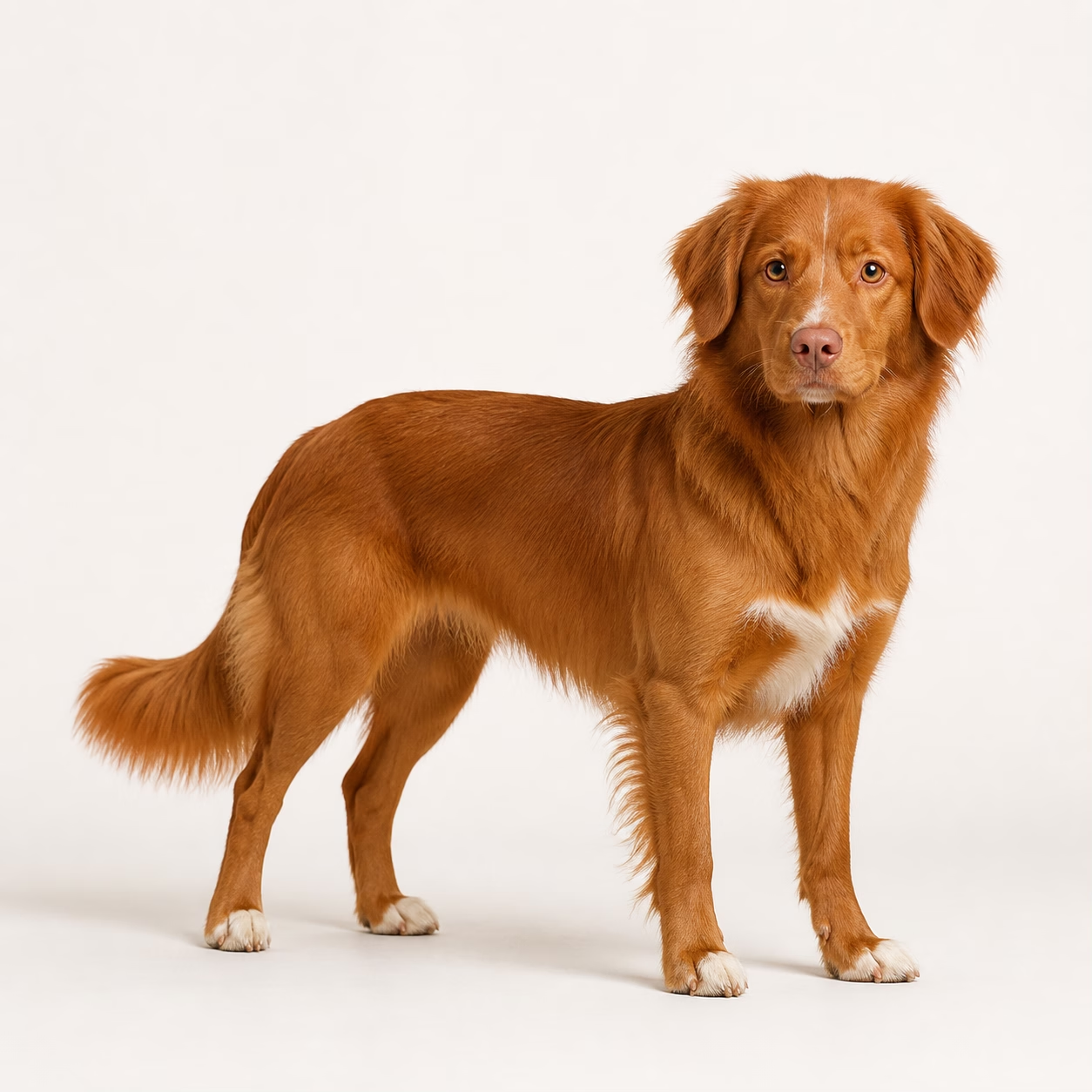
Nova Scotia Duck Tolling Retriever
AKA — Toller, Little River Duck Dog, Yarmouth Toller
The Little Red Retriever Who Came to Work
The Toller is smaller than a Golden and often more intense: smart, sensitive, athletic, and famously loud when excited.
Breed traits at a glance
Tollers were built for repeated work on land and water. They thrive when daily exercise has a purpose, whether that is retrieving, scent work, swimming, or dog sports.
They learn quickly but can be sensitive and independent. Short, purposeful sessions usually work better than drilling the same skill or training in frustration.
Many are affectionate family dogs, though their intensity and noise are often easier with older children who can follow the household rules around the dog.
The water-repellent double coat needs weekly brushing and more work during seasonal shedding. Feathering and ears need attention after water.
The famous Toller scream is a piercing sound of excitement. It is startling in person, and close neighbors may have opinions.
Tollers have a shedding double coat and are not considered a reliable match for allergy-sensitive households.
The honest fit check
Is a Nova Scotia Duck Tolling Retriever right for you?
A Toller may look like a compact family retriever, but daily life feels more like living with a sensitive sport dog—and one with a very loud excitement button.
Great fit if…
- You want training, retrieving, hiking, or dog sports built into daily life.
- You enjoy a clever dog who notices small changes in handling and routine.
- You can provide hard activity while deliberately teaching calm recovery.
- You have realistic tolerance for shedding, intensity, and the Toller scream.
Think twice if…
- You want a smaller Golden Retriever with lower exercise needs.
- Your routine depends on dog parks instead of structured activity with you.
- Sharp excitement noise would create problems with neighbors or family.
- You prefer a forgiving dog who shrugs off inconsistent or heavy-handed training.
Daily reality
- Exercise
- A substantial daily workout with a purpose, such as retrieving, training, swimming, or sport work.
- Shedding
- Moderate year-round with heavy seasonal undercoat release.
- Alone time
- Can learn independence, but boredom and underwork create trouble quickly.
- Grooming
- Brush weekly and more during coat blows; dry ears and feathering after water.
- Size
- About 30 to 50 lb and 17 to 21 in.
Temperament & Personality
The Nova Scotia Duck Tolling Retriever was developed in southwestern Nova Scotia in the early 19th century. From a concealed position, a hunter would toss a stick along the shoreline, sending the quick red dog darting in and out of view. That fox-like movement played on the curiosity of ducks offshore and drew them closer to the hunter. After the shot, the dog retrieved the bird from land or cold water. Luring the ducks within range is the “tolling” part of the name.
Tollers are the smallest retrievers, generally 17 to 21 inches and 30 to 50 pounds. They are compact, agile dogs with red or orange water-repellent double coats. White may appear on the feet, chest, face, or tail tip. The size is manageable. The work drive often is not.
The typical Toller is intelligent, alert, affectionate with family, and ready to act at the first hint of a retrieving game. Some are reserved with strangers. Many are more sensitive to pressure than a Labrador or Golden, so clear communication and good timing matter. Pointless repetition can lose their interest; harsh handling can lose their trust.
Prospective owners should hear the Toller scream before bringing one home. This high-pitched excitement sound can be alarming even when nothing is wrong. Training can reduce it, but some Tollers will always be quick to find their volume.
What It's Like To Own One
A Toller watches for the smallest clue that something useful might happen. Pick up a bumper, change shoes, or glance toward the car and the dog is already making a plan. The speed from resting to fully operational is impressive.
That readiness makes training rewarding, but daily life also needs an off switch. Endless fetch may simply create a fitter dog who is even more obsessed with fetch. Mix physical work with scent games, obedience, settle practice, and real recovery. You are building an athlete who can work hard and then exhale.
The sensitivity surprises people. A Toller may look fearless in motion and still react strongly to poor timing, conflict, or repetitive pressure. Good handlers stay calm, break skills into clear pieces, and let mistakes remain part of the lesson rather than turning them into a confrontation.
When the match is right, the dog is magnetic: fast, expressive, intensely engaged, and ready to work beside you. In an underprepared home, those same qualities can spill into screaming, pacing, destruction, and frustration beneath a very pretty red coat.
I am:Maverick from Top Gun
Compact, fast, intensely focused, confident under pressure, and never interested in taking the slow route to the assignment.
Famous & Fictional Owners
People and characters whose lifestyle, energy, and identity fit this breed.
Lindsey Vonn
An outdoor athlete who understands drive, repetition, recovery, and the difference between being active and training with purpose.
Shaun White
Fast, coordinated, competitive, and comfortable building life around practice and the next physical challenge.
Katniss Everdeen
Sharp, quiet in observation, quick in action, and at home with a focused partner in the woods.
Dating Profile
I am the smallest retriever and possibly the loudest person at the event. I like water, precision, speed, and retrieving something you thought we had finished retrieving. I notice your timing, especially when it is sloppy. If training, field work, hiking, agility, or dock diving sounds like a good week to you, we should talk. You may want to warn the neighbors first.
Where They Want To Live
Tollers do best in active homes with time set aside for the dog. Trails, fields, safe water, or dog-sport facilities are valuable, and a fenced area makes training easier. None of them replaces doing the work together.
Apartment living is possible for a skilled owner, but the scream and high arousal make shared walls a difficult default. Quiet hours and limited space to decompress deserve serious thought. Rural acreage is no automatic solution either. The dog wants a job, not a view.
Things To Know
- The Toller is not a smaller or easier Golden Retriever
- The excitement scream can be startling, piercing, and difficult to eliminate
- Sensitivity and high drive often arrive in the same red package
- Retrieving instinct and working ability remain central to the breed
- Breeding dogs need orthopedic, eye, cardiac, and breed-specific genetic testing
Gear Guide
- Retrieving bumpers in several sizes and textures
- Long line for recall and field foundations
- Floating toys and a well-fitted canine life jacket
- Undercoat rake and pin brush for seasonal shedding
- Portable settle mat for winding down after exciting work
Health Watch: Common Breed Risks
Toller breed clubs track an unusually long list of testable conditions. A good breeder should provide public results, explain the pedigree, and show how DNA risks were handled in the pairing.
- Hip and elbow dysplasia
- Progressive retinal atrophy and Collie eye anomaly
- Juvenile Addison's disease (JADD)
- Cardiac disease, including the CLAM genetic risk
- Degenerative encephalopathy and CDMC neurologic disease
- Cleft palate variants and CDDY or IVDD risk
Coat, Shedding & Grooming Needs
The medium, water-repellent double coat was made for work. It also sheds, collects field debris, and needs a thorough drying after time in the water.
- Brush weekly with a pin brush and comb through feathering
- Use an undercoat tool during seasonal shedding without scraping the skin
- Check ears, feet, armpits, and tail after field work
- Rinse and dry thoroughly after swimming in questionable water
- Trim only for neatness and avoid routine shaving, which removes the coat's weather protection while it grows back
Diet & Nutrition Needs
A working Toller should stay lean enough to sprint, jump, and swim comfortably. When the workload changes with the season, portions may need to change too.
- Feed a complete and balanced diet for the dog's life stage
- Match portions to actual workload instead of the dog's appetite
- Use part of the daily ration during training
- Keep puppies lean and avoid repetitive impact while joints develop
- Carry water and plan breaks during warm-weather field work
Health Care Tips
Health testing deserves a close look in this breed. Ask for the records and learn what clear, carrier, and affected mean for each pairing.
- Verify hip, elbow, eye, cardiac, and thyroid records in public databases
- Review breed-specific DNA results, including JADD and current Toller panels
- Condition gradually for swimming, running, and jumping sports
- Dry ears and inspect paws after every water or field session
- Report unusual neurologic, cardiac, or Addisonian symptoms promptly
This breed is especially well-suited for:
Related Breeds
 L
L Golden Retriever
Happy to Be Here
Learn more → L
L Labrador Retriever
America's favorite fetch-obsessed family dog.
Learn more → L
L Chesapeake Bay Retriever
Tough, Smart, and Unsinkable
Learn more → M
M Boykin Spaniel
The Little Brown Dog with the Big Heart
Learn more → M
M Brittany
Athletic, Affectionate, and Always Game
Learn more → M
M English Springer Spaniel
Always Ready, Always Sweet
Learn more →The Toller is a remarkable small retriever for people who want the work. Fast, clever, affectionate, and intensely engaged, this dog needs more than casual family walks. The sensitivity, excitement, and noise can be a lot, but for someone who considers training and activity the fun part, a Toller can be an extraordinary partner.